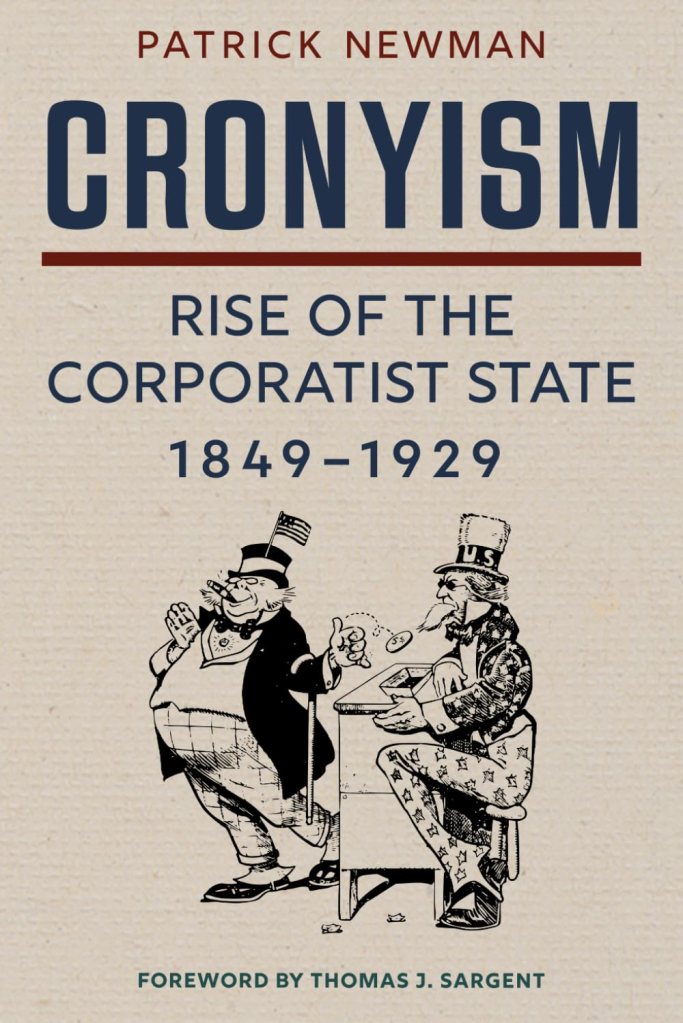
The second volume of Cronyism describes the evolution of special interest policies from the collapse of the Jacksonian Democrat coalition until the beginning of the Great Depression. During this time, Wall Street and big business lobbied for the creation of the corporatist state, a system of government-sponsored cartels and monopolies. They achieved their desired policies by advocating for regulatory commissions that were run by friendly personnel who would enact their preferred special privileges.
Murray N. Rothbard: The Making of an Austrian Economist, with Joseph T. Salerno (2026)
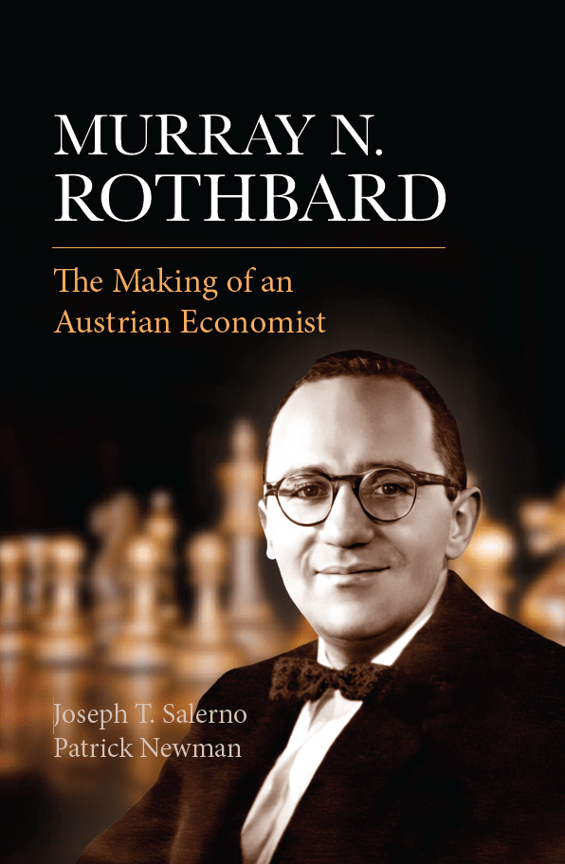
A history of Murray N. Rothbard’s writing of Man, Economy, and State. It elucidates Rothbard’s many contributions to Austrian economics and the processes by which he developed an integrated structure of economic theory using the praxeological method. It shows that Rothbard is the most important heir of Ludwig von Mises.
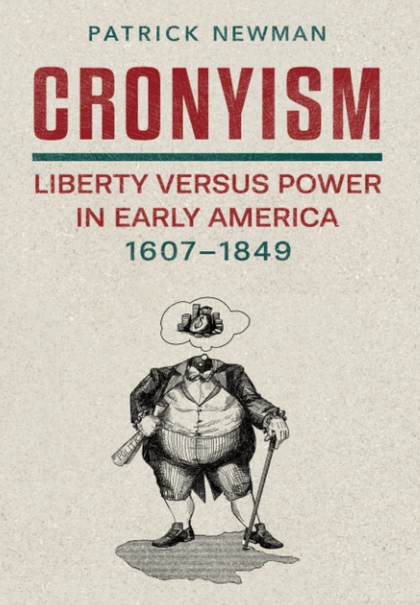
The first volume of Cronyism explains the evolution of special interest policies from Jamestown to the Mexican War. Cronyism increased when the supporters of power, such as the Hamiltonian Federalists and Whigs, controlled the government. Cronyism decreased when the libertarian Jeffersonian Republicans and Jacksonian Democrats seized the reins. However, the proponents of liberty eventually enacted their own crony policies because they succumbed to the corrupting influence of power.
Conceived in Liberty, Volume V: The New Republic, 1784-1791 by Murray Rothbard, edited by Patrick Newman (2019)
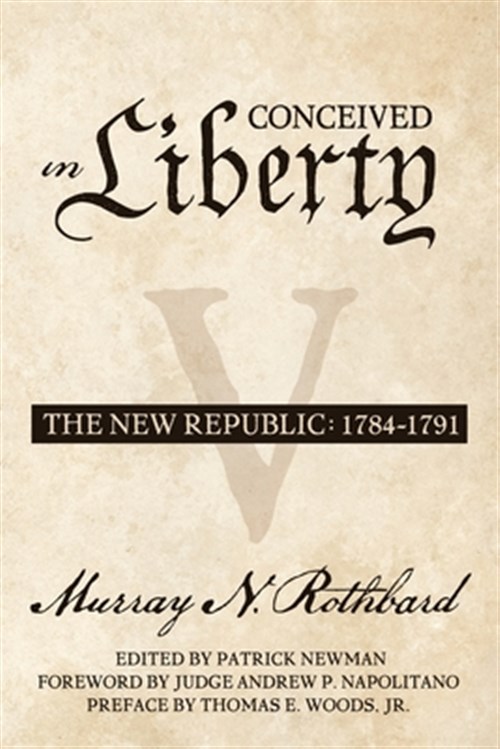
Murray N. Rothbard’s long-lost fifth volume of his early American history series. Brought to publication through painstaking transcription of his handwritten manuscript. Rothbard documents the Federalist coup d’état in the 1780s which led to the drafting and ratification of the U.S. Constitution. A staunchly nationalist document, the U.S. Constitution increased federal government power at the expense of the people and the states.
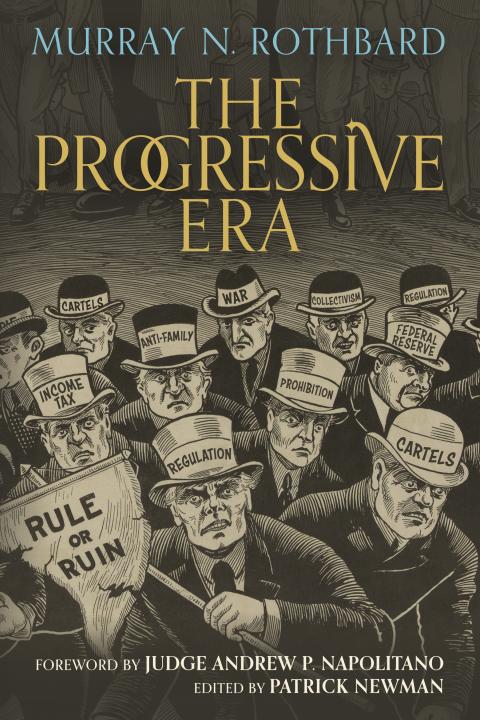
The Progressive Era by Murray Rothbard, edited by Patrick Newman (2017)
Murray N. Rothbard’s unfinished manuscript and published essays on the Progressive Era. In the manuscript Rothbard discusses historical events from the development of the Interstate Commerce Commission through the presidential administration of Theodore Roosevelt. In the essays Rothbard documents the rise of the welfare state, the Federal Reserve, and government intervention during World War I.

